
Wednesday, October 14, 2015

Tuesday, October 13, 2015

Human Population
10/13
Today we will:
1. Complete Socratic Seminar pages 121-130
Wednesday: 131-140
Thursday: 141-150
2. Pick up new pages.
3. Start the notes for Chapter 7
4. DOL Quiz first 5
Cornell Notes Questions
Explain.
5. What is infant mortality rate? Why it is considered a good indicator of quality
of life?
(C) crude birth rate
(D) IPAT
(E) natural increase
3. the number of deaths per 1000 persons
4. crude birth rate – crude death rate
5. highest among women in developing countries
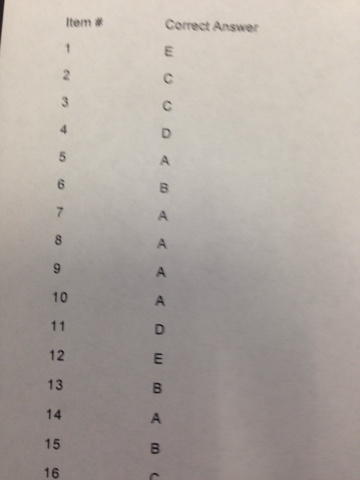
Directions: For each of the following questions, select the one lettered choice that
best answers the question.
(C) Great Britain
(D) Italy
(E) Japan
(D) 2040
(E) 2050
I. during stage one, birth rates drop continuouslyII. during the post-industrial phase both birth and death rates remain low
III. demographic transition is currently occurring in every country
(A) I only
(B) II only
(C) III only
(D) II and III
(E) I, II and III
(C) Religion
(D) Societal views
(E) High infant mortality rate
(C) the Second Agricultural Revolution
(D) the First Agricultural Revolution
(E) during the twentieth century
Free-Response Question:
Directions: Answer all parts of the following question. Where explanation or discussion is required, support your answers with relevant information and/or specific examples. When a calculation is required, be sure to show how you arrived at your answer.
1. Use the following diagram to answer the following questions.

(a) Approximately how many people are under the age of 3
(b) This is an age structure diagram for a developing country. What type of growth does this country demonstrate? Name a country that this graph
could represent.
(c) Identify and describe TWO factors that account for this type of growth
[must match your answer in part (b)].
(d) Explain TWO practices a government could implement to slow population growth.
Today we will:
1. Complete Socratic Seminar pages 121-130
Wednesday: 131-140
Thursday: 141-150
2. Pick up new pages.
3. Start the notes for Chapter 7
4. DOL Quiz first 5
Cornell Notes Questions
1. What role does education play in the number of children a family has?
2. How do the following key factors influence population size: immigration policy, family planning, economic rewards and penalties, and empowering
women?
3. A country has a birth rate of 48 per 1,000 and a death rate of 16 deaths per
1,000. Would you say this is a developing country or a developed country?
Explain.
4. What is the correlation between annual income and life expectancy?
6. What are the four stages of demographic transition? Do birth/death rates increase, decrease or stay the same in each stage? Why do the birth/death rates change as they do?
Practice Questions
Multiple Choice:
Directions for questions 1-5: The lettered choices below correspond to the
descriptions given in questions 1-5. Select the one lettered choice that best fits
each statement. Each choice may be used once, more than once, or not at all.
(A) total fertility rate
(B) crude death rate
(C) crude birth rate
(D) IPAT
(E) natural increase
1. the number of births per 1000 persons
2. the average number of children born to a woman during her reproductive
lifetime
3. the number of deaths per 1000 persons
4. crude birth rate – crude death rate
5. highest among women in developing countries
Directions: For each of the following questions, select the one lettered choice that
6. This country’s population pyramid would have a wide bottom and a very narrow top.
(A) Kenya
(B) United States
(C) Great Britain
(D) Italy
(E) Japan
7. In the year 2000, a country has a population of 100,000 people. The growth
rate is 3.5%. In what year will the population be 400,000?
(A) 2010
(B) 2020
(C) 2030(B) 2020
(D) 2040
(E) 2050
8. Which of the following is/are true of demographic transition?
I. during stage one, birth rates drop continuouslyII. during the post-industrial phase both birth and death rates remain low
III. demographic transition is currently occurring in every country
(A) I only
(B) II only
(C) III only
(D) II and III
(E) I, II and III
9. Of the following reasons, which one accounts for the largest drop in total
fertility rate?
(A) Women’s education and empowerment
(B) Cultural beliefs
(C) Religion
(D) Societal views
(E) High infant mortality rate
10. The first dramatic increase in population took place during the following time
period.
(A) the Industrial Revolution
(B) the Green Revolution
(C) the Second Agricultural Revolution
(D) the First Agricultural Revolution
(E) during the twentieth century
Free-Response Question:
Directions: Answer all parts of the following question. Where explanation or discussion is required, support your answers with relevant information and/or specific examples. When a calculation is required, be sure to show how you arrived at your answer.
1. Use the following diagram to answer the following questions.

(b) This is an age structure diagram for a developing country. What type of growth does this country demonstrate? Name a country that this graph
could represent.
(c) Identify and describe TWO factors that account for this type of growth
[must match your answer in part (b)].
(d) Explain TWO practices a government could implement to slow population growth.
Thursday, October 8, 2015
Socratic Wrap 10/5-10/9
10/9/2015
Email me CHAPTER 6 QUIZ some of you still need daily grades this week.
Today's seminar should be 15 minutes! Time it so you can use the remaining time to wrap.
This week we had four seminars, and your wrap should consist of:
4 debriefs
4 self-evaluations
2 partner evaluations
Instead of writing a summary, create a flow chart/concept map tracking Ishmael's explanation of Taker and Leaver cultures.
Include on your map: Adam&Eve, Cain&Abel, The ABC's, Semites, Ishmael, The Narrator, the gods, tree of life, tree of knowledge, indigenous peoples, the early aeronauts, law of natural selection, law of man, population control, unregulated growth.
And anything else that you can recall. Use arrows to show how one idea relates to the others.
This is a project grade. Some of you still need a project grade.
Finally, look back over your evaluations from previous weeks. Answer the following:
What changes do you see?
Has your interest and participation gone up or down?
What are your goals for the last week?
Thanks again for embarking on this journey with me. I sincerely hope our exploration of this book will help us dig deeper into the topic of Environmental Science. I may or may not agree with everything in Ishmael, but I do believe that turning on our brains is the key. We have to past the trite messages, "Save the whales!" etc., and delve deeper, really get our hands on (who said this, Esmerelda?), and find sustainable ways to live.
Priscilla asked me one day, "Do you think that this book is really about activating those parts of our brain that we don't use?"
And the best I could say is, "Quite possibly."
All I know, is that yesterday, when I thought fourth period hadn't read, and wasn't really processing, your writing showed me that you were. Keep going. I can't wait to see what get said tomorrow when I'm not there. Someone record that seminar (if you can convince the sub that it's all right by me).
I refuse to read the Cliff Notes, and I sincerely hope you will stay away from them and think for yourself. Speak your own mind, regardless of the grammar and spelling.
Email me CHAPTER 6 QUIZ some of you still need daily grades this week.
Today's seminar should be 15 minutes! Time it so you can use the remaining time to wrap.
This week we had four seminars, and your wrap should consist of:
4 debriefs
4 self-evaluations
2 partner evaluations
Instead of writing a summary, create a flow chart/concept map tracking Ishmael's explanation of Taker and Leaver cultures.
Include on your map: Adam&Eve, Cain&Abel, The ABC's, Semites, Ishmael, The Narrator, the gods, tree of life, tree of knowledge, indigenous peoples, the early aeronauts, law of natural selection, law of man, population control, unregulated growth.
And anything else that you can recall. Use arrows to show how one idea relates to the others.
This is a project grade. Some of you still need a project grade.
Finally, look back over your evaluations from previous weeks. Answer the following:
What changes do you see?
Has your interest and participation gone up or down?
What are your goals for the last week?
Thanks again for embarking on this journey with me. I sincerely hope our exploration of this book will help us dig deeper into the topic of Environmental Science. I may or may not agree with everything in Ishmael, but I do believe that turning on our brains is the key. We have to past the trite messages, "Save the whales!" etc., and delve deeper, really get our hands on (who said this, Esmerelda?), and find sustainable ways to live.
Priscilla asked me one day, "Do you think that this book is really about activating those parts of our brain that we don't use?"
And the best I could say is, "Quite possibly."
All I know, is that yesterday, when I thought fourth period hadn't read, and wasn't really processing, your writing showed me that you were. Keep going. I can't wait to see what get said tomorrow when I'm not there. Someone record that seminar (if you can convince the sub that it's all right by me).
I refuse to read the Cliff Notes, and I sincerely hope you will stay away from them and think for yourself. Speak your own mind, regardless of the grammar and spelling.
Wednesday, October 7, 2015


Factors that Regulate Growth
10/7
Weekly
2 homework/class assignments (notes)
1 project grade (labs, summary assignments,
assorted)
2 chapter tests (your choice chapters 6-9,
chapter 6 test due Wednesday)
Weekly
2 homework/class assignments (notes)
1 project grade (labs, summary assignments,
assorted)
2 chapter tests (your choice chapters 6-9,
chapter 6 test due Wednesday)
There are 5 weeks this six weeks. But I will try to close the grades in week 4, so week 5 is review

Monday, October 5, 2015
Ishmael and Population (Chapter 6 PPT)
10/5
Turn in:
Summary assignment for 9/28-10/2
3 debriefs
3 self-evaluations
summary
1 or 2 partner evaluations
Wednesday:
Resume Socratic Seminar
Pages 90-100 Wednesday
Pages 101-110 Thursday
Pages 111-120 Friday
Turn in a drawing. One side of the page reflects the world in where
"The rule of that law was and is sufficient. Mankind was not needed to bring order to the world."-- Ishmael, pg 86
The other side is what the world looks like where man is the ruler.
CHAPTER 6 POPULATION BIOLOGY powerpoint
Chapter Overview
The AP student needs to be competent in exponential and logistic growth curves
and the implications of each including the concept of carrying capacity. Type I, II
and III survivorship curves, characteristics of r and K -selected species, and
examples of each should be learned. Students need to know biotic and abiotic
factors in the environment and their role in determining population size.
Applications of conservation biology should be understood.
Key Concepts
6.1 Explain exponential growth and logistic growth.
6.2 Compare and contrast the factors that regulate population growth.
6.3 Summarize the characteristics of r-selected species and K-selected species.
Applications of Type I, II, and III survivorship curves
6.4. Understand the difference between density dependent and densityindependent
factors.
6.4 Identify some applications of population dynamics in conservation biology.
Use the Rule of 70 to calculate doubling time and growth rate.
Key Terms
biotic potential
biotic factors
exponential growth
abiotic factors
carrying capacity
stress-related diseases
population crash
conservation biology
logistic growth
island
biogeography
density dependent
genetic drift
densityindependent
founder effect
r-selected species
demographic bottleneck
K-selected species
minimum viable
population size
BIDE
metapopulation
survivorship curve
Practice Questions
Multiple Choice:
Directions for questions 1-5: The lettered choices below correspond to the
descriptions given in questions 1-5. Select the one lettered choice that best fits
each statement. Each choice may be used once, more than once, or not at all.
(A) exponential growth
(B) logistic growth
(C) carrying capacity
(D) population crash
(E) survivorship curve
1. S shaped curve
2. J shaped curve
3. rapid die back
4. the top level portion of a sigmoid population graph
5. signifies growth of natural populations due to limiting factors
Directions: For each of the following questions, select the one lettered choice that
best answers the question.
6. Which of the following is an r-selected species?
(A) homo sapien
(B) giant panda
(C) African elephant
(D) cockroach
(E) elk
7. Which of the following is a density dependent factor in population growth?
(A) fire
(B) disease
(C) volcanic eruption
(D) flood
(E) hurricane
8. A population of bald eagles exhibit which of the following characteristics?
I. they are predators
II. upper trophic level species
III. produce many small offspring
(A) I only
(B) II only
(C) III only
(D) I and II
(E) I, II and III
9. The number or biomass of a species that can be supported in a certain area
without depleting resources is defined as the ____________.
(A) population crash
(B) logistic growth
(C) exponential growth population
(D) natural increase
(E) carrying capacity
10. A type III survivorship curve exhibits all of the following characteristics
except
(A) late loss
(B) many offspring with high mortality
(C) those that survive live their entire life span
(D) early loss
(E) produce many offspring
Free-Response Question:
Directions: Answer all parts of the following question. Where explanation or
discussion is required, support your answers with relevant information and/or
specific examples. When a calculation is required, be sure to show how you
arrived at your answer.
1. The giant panda is an endangered species that lives in China. Answer the
following questions with regard to this endangered species.
(a) Identify and describe TWO reasons why the giant panda is endangered.
(b) Is the giant panda a K-selected species or r-selected species? Explain your
reasoning.
(c) In 2004, the population of giant pandas in the wild in China was 1600
individuals. If their growth rate is 1.0%, in what year will their population
exceed 3200 individuals?
(d) Describe TWO strategies that the Chinese government could employ to
insure that the population of giant pandas will continue to rise.
Turn in:
Summary assignment for 9/28-10/2
3 debriefs
3 self-evaluations
summary
1 or 2 partner evaluations
Wednesday:
Resume Socratic Seminar
Pages 90-100 Wednesday
Pages 101-110 Thursday
Pages 111-120 Friday
Turn in a drawing. One side of the page reflects the world in where
"The rule of that law was and is sufficient. Mankind was not needed to bring order to the world."-- Ishmael, pg 86
The other side is what the world looks like where man is the ruler.
CHAPTER 6 POPULATION BIOLOGY powerpoint
Chapter Overview
The AP student needs to be competent in exponential and logistic growth curves
and the implications of each including the concept of carrying capacity. Type I, II
and III survivorship curves, characteristics of r and K -selected species, and
examples of each should be learned. Students need to know biotic and abiotic
factors in the environment and their role in determining population size.
Applications of conservation biology should be understood.
Key Concepts
6.1 Explain exponential growth and logistic growth.
6.2 Compare and contrast the factors that regulate population growth.
6.3 Summarize the characteristics of r-selected species and K-selected species.
Applications of Type I, II, and III survivorship curves
6.4. Understand the difference between density dependent and densityindependent
factors.
6.4 Identify some applications of population dynamics in conservation biology.
Use the Rule of 70 to calculate doubling time and growth rate.
Key Terms
biotic potential
biotic factors
exponential growth
abiotic factors
carrying capacity
stress-related diseases
population crash
conservation biology
logistic growth
island
biogeography
density dependent
genetic drift
densityindependent
founder effect
r-selected species
demographic bottleneck
K-selected species
minimum viable
population size
BIDE
metapopulation
survivorship curve
Practice Questions
Multiple Choice:
Directions for questions 1-5: The lettered choices below correspond to the
descriptions given in questions 1-5. Select the one lettered choice that best fits
each statement. Each choice may be used once, more than once, or not at all.
(A) exponential growth
(B) logistic growth
(C) carrying capacity
(D) population crash
(E) survivorship curve
1. S shaped curve
2. J shaped curve
3. rapid die back
4. the top level portion of a sigmoid population graph
5. signifies growth of natural populations due to limiting factors
Directions: For each of the following questions, select the one lettered choice that
best answers the question.
6. Which of the following is an r-selected species?
(A) homo sapien
(B) giant panda
(C) African elephant
(D) cockroach
(E) elk
7. Which of the following is a density dependent factor in population growth?
(A) fire
(B) disease
(C) volcanic eruption
(D) flood
(E) hurricane
8. A population of bald eagles exhibit which of the following characteristics?
I. they are predators
II. upper trophic level species
III. produce many small offspring
(A) I only
(B) II only
(C) III only
(D) I and II
(E) I, II and III
9. The number or biomass of a species that can be supported in a certain area
without depleting resources is defined as the ____________.
(A) population crash
(B) logistic growth
(C) exponential growth population
(D) natural increase
(E) carrying capacity
10. A type III survivorship curve exhibits all of the following characteristics
except
(A) late loss
(B) many offspring with high mortality
(C) those that survive live their entire life span
(D) early loss
(E) produce many offspring
Free-Response Question:
Directions: Answer all parts of the following question. Where explanation or
discussion is required, support your answers with relevant information and/or
specific examples. When a calculation is required, be sure to show how you
arrived at your answer.
1. The giant panda is an endangered species that lives in China. Answer the
following questions with regard to this endangered species.
(a) Identify and describe TWO reasons why the giant panda is endangered.
(b) Is the giant panda a K-selected species or r-selected species? Explain your
reasoning.
(c) In 2004, the population of giant pandas in the wild in China was 1600
individuals. If their growth rate is 1.0%, in what year will their population
exceed 3200 individuals?
(d) Describe TWO strategies that the Chinese government could employ to
insure that the population of giant pandas will continue to rise.
Subscribe to:
Posts (Atom)